
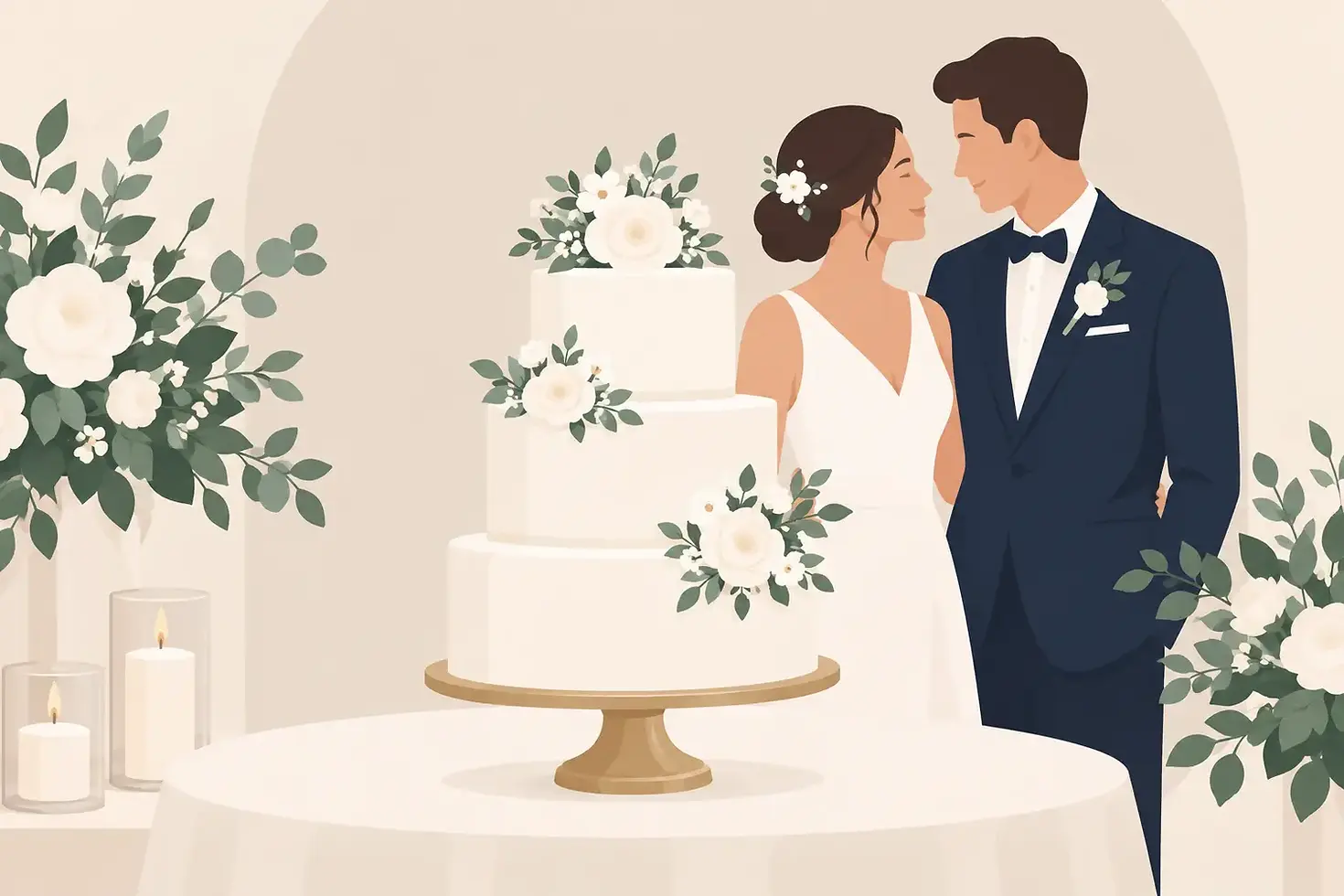
Why Do We Have Wedding Cakes? A Sweet Tradition

A wedding cake is rarely just dessert. It is the moment guests gather close, cameras come out, and two families share something made for the occasion. So, why do we have wedding cakes? The tradition began with wishes for prosperity and fertility, then grew into a beautiful celebration of hospitality, partnership, and personal style.
For couples planning a Dubai wedding, the cake still carries that meaning, even when the design is sleek, floral, minimalist, or entirely unexpected. It creates a focal point for the reception and gives every guest a sweet part of the day to remember.
Why Do We Have Wedding Cakes in the First Place?
Wedding cakes have ancient roots, although they did not always look like the elegant tiered cakes we recognize today. In ancient Rome, a simple barley cake was broken over the bride's head as a symbolic wish for good fortune, abundance, and a fruitful marriage. Guests would collect the crumbs because they believed sharing them brought luck.
Over time, that ritual changed. In medieval England, guests brought small spiced buns and stacked them into a pile. Tradition said that if the couple could kiss over the tall stack without knocking it down, they would enjoy a happy life together. Whether or not anyone could manage that balancing act, the message was clear: food had become a way for a community to celebrate a new union.
By the 17th and 18th centuries, wedding cakes became richer and more elaborate. Sugar was expensive, so a white iced cake became a visible sign of celebration and prosperity. White also became associated with purity and new beginnings. Today, couples are free to choose any flavor, color, or finish they love, but the cake still represents generosity, joy, and a shared future.
The Wedding Cake Is Meant to Be Shared
The most enduring reason wedding cakes remain popular is simple: they bring people together. A wedding can involve a full schedule of arrivals, speeches, photos, music, and meals. The cake-cutting moment gives everyone a pause. It invites guests to look toward the couple and celebrate them as one.
Traditionally, the couple cuts the first slice together. This small act symbolizes teamwork and their commitment to provide for one another. Feeding each other a bite may feel playful, but it also reflects trust and care. Some couples keep it polished and romantic; others lean into the laughter. Both approaches work because the meaning is personal.
Then comes the part guests appreciate most: sharing the cake. Serving dessert is a gesture of hospitality. It says thank you for being here, for traveling, for supporting us, and for celebrating this milestone with us. Even at a large reception, a beautifully crafted wedding cake makes the experience feel personal.
How Wedding Cakes Became a Reception Centerpiece
As weddings became more design-led, cakes took on another role: visual storytelling. A cake can reflect the wedding palette, floral arrangements, venue, heritage, or the couple's favorite flavors. It may be covered in delicate buttercream textures, hand-piped details, fresh flowers, fondant artistry, or a clean modern finish.
A tiered cake also naturally creates height and presence in a reception space. Positioned near the dance floor, head table, or a dedicated dessert display, it becomes part of the event décor before it is served. Guests notice it early, photograph it often, and remember it long after the last slice is gone.
That does not mean every wedding needs a towering, multi-tier cake. A smaller cutting cake with matching cupcakes, dessert jars, macarons, or individual pastries can be a smart choice for an intimate ceremony or a guest list with varied preferences. The trade-off is visual impact versus variety and ease of service. A larger centerpiece feels formal and dramatic, while a dessert table can feel more relaxed and abundant.
Tradition Has Room for Personal Taste
Modern wedding cakes are no longer limited to fruitcake beneath thick white icing. Couples can choose classic vanilla, rich chocolate, red velvet, pistachio, lotus biscoff, fresh fruit, cheesecake-inspired layers, or flavors that reflect their own story. In Dubai, it is also common for couples to consider a diverse guest list when planning flavors, portions, and presentation.
The best choice depends on the event. A daytime garden celebration may suit bright citrus or berry flavors. A formal evening reception may call for chocolate, coffee, caramel, or a refined vanilla bean cake. For a multicultural celebration, flavors inspired by family traditions can make the dessert feel especially meaningful.
Design should follow the same principle. A cake does not need to copy every detail of the venue to look considered. One or two thoughtful connections, such as matching the flower colors, echoing a lace pattern, or adding a meaningful topper, are often more elegant than trying to include everything at once.
The Top Tier Tradition and What It Means Today
For generations, couples saved the top tier of their wedding cake to enjoy on their first anniversary or at the christening of their first child. Before modern refrigeration, fruitcake was especially suitable for this custom because its ingredients helped it keep longer than a fresh cream-filled cake.
Many couples still love the sentiment, but the practical choice has changed. Fresh cakes with mousses, dairy fillings, or delicate fruit layers are not made for long-term storage. Freezing a portion for an anniversary can work if it is wrapped carefully, but it will not always taste as fresh as it did on the wedding day.
A better option for many couples is to order a small anniversary cake in the same flavor or design style a year later. It preserves the tradition without compromising on freshness. It is also a lovely excuse to revisit the celebration with a dessert made specifically for that moment.
Choosing a Cake That Feels Worth the Moment
The right wedding cake should look beautiful, taste exceptional, and suit the flow of your event. Start with your guest count and whether the cake will be the only dessert or part of a larger spread. From there, consider the venue temperature, serving time, dietary needs, and the amount of detail you want in the design.
For outdoor or warm-weather celebrations, certain finishes and fillings need extra care. Buttercream can be beautiful, but it may require thoughtful placement away from direct heat. Fondant offers structure for intricate designs, though some guests prefer the flavor and softer finish of buttercream. A skilled bakery can help balance appearance, taste, and practicality rather than asking you to sacrifice one for another.
It also helps to choose a baker who understands that wedding cakes are both food and event pieces. At Bakery Bites Cafe, handcrafted production, premium ingredients, and tailored design details help couples create a cake that feels made for their celebration, not selected from a generic display.
The cake-cutting photos may last seconds, but the feeling around them lasts much longer. Choose a cake you are genuinely excited to cut, serve, and share - one that gives your guests a delicious reason to stay close for one more memorable moment.



Comments