
How to Transport Tiered Cakes Without Damage
- Toss Creatives

- 10 minutes ago
- 6 min read
A beautiful tiered cake can take hours of careful baking, filling, frosting, and hand-finished detail. Learning how to transport tiered cakes protects that work from the moment it leaves the kitchen until the celebration begins. In Dubai's warm climate, where a short trip can quickly soften buttercream or shift a delicate topper, the right preparation is not optional - it is part of the cake design.
At Bakery Bites Cafe, every celebration cake is treated as a centerpiece, whether it is a refined wedding cake, a themed birthday cake, or an elegant baby shower design. Safe transport comes down to structure, temperature, packaging, and a calm, level journey.
Start With a Cake Built for Travel
The best transport plan begins before the cake is stacked. Each tier needs a firm cake board directly underneath it, cut to the same diameter as the cake. A larger base board supports the entire design and gives the person carrying it a stable surface to hold.
Tiered cakes also need internal support. Food-safe dowels, straws, or a purpose-made support system are placed into the lower tiers so the weight of the cake above rests on the supports, not on soft sponge and filling. The top tier should sit on its own board before it is placed over the supported tier below.
This is especially important for tall cakes, fondant-covered cakes, and designs with heavy decorations. Fresh cream cakes and mousse-based fillings can be wonderful for smaller celebrations, but they require more caution in a stacked design. If the journey is long, the weather is hot, or the cake will be displayed outdoors, ask your baker for a structure and finish designed for those conditions.
Stack It or Assemble It at the Venue?
A fully stacked cake is convenient and visually ready on arrival, but it is not always the safest option. A two-tier cake with a stable base and short local drive can often travel assembled when properly chilled and supported.
For three or more tiers, unusually tall designs, fragile sugar flowers, or long delivery routes, transporting tiers separately is often the wiser choice. The baker or event team can stack the cake at the venue, preserving clean edges and delicate details. This small extra step can prevent a costly last-minute repair.
Chill the Cake Before It Leaves
Cold cake is firm cake. Chilling helps buttercream set, strengthens the filling, and reduces the chance of fingerprints, smudges, or sliding layers. Refrigerate the finished cake until the frosting feels firm to the touch, while allowing enough time for condensation to settle before final packaging.
Do not freeze a decorated tiered cake unless the cake recipe, filling, and decorations are suitable for freezing. Frozen cakes can produce condensation as they thaw, which may affect fondant, wafer paper, edible images, and metallic finishes. Refrigeration is usually the safer choice for a finished custom cake.
In warm weather, keep the cake in a cool, air-conditioned environment right up to departure. Never leave it on a counter while gathering supplies or loading the car. A chilled cake will gradually warm during transport, so begin the journey with the cake at its firmest.
Choose a Box That Holds the Cake Securely
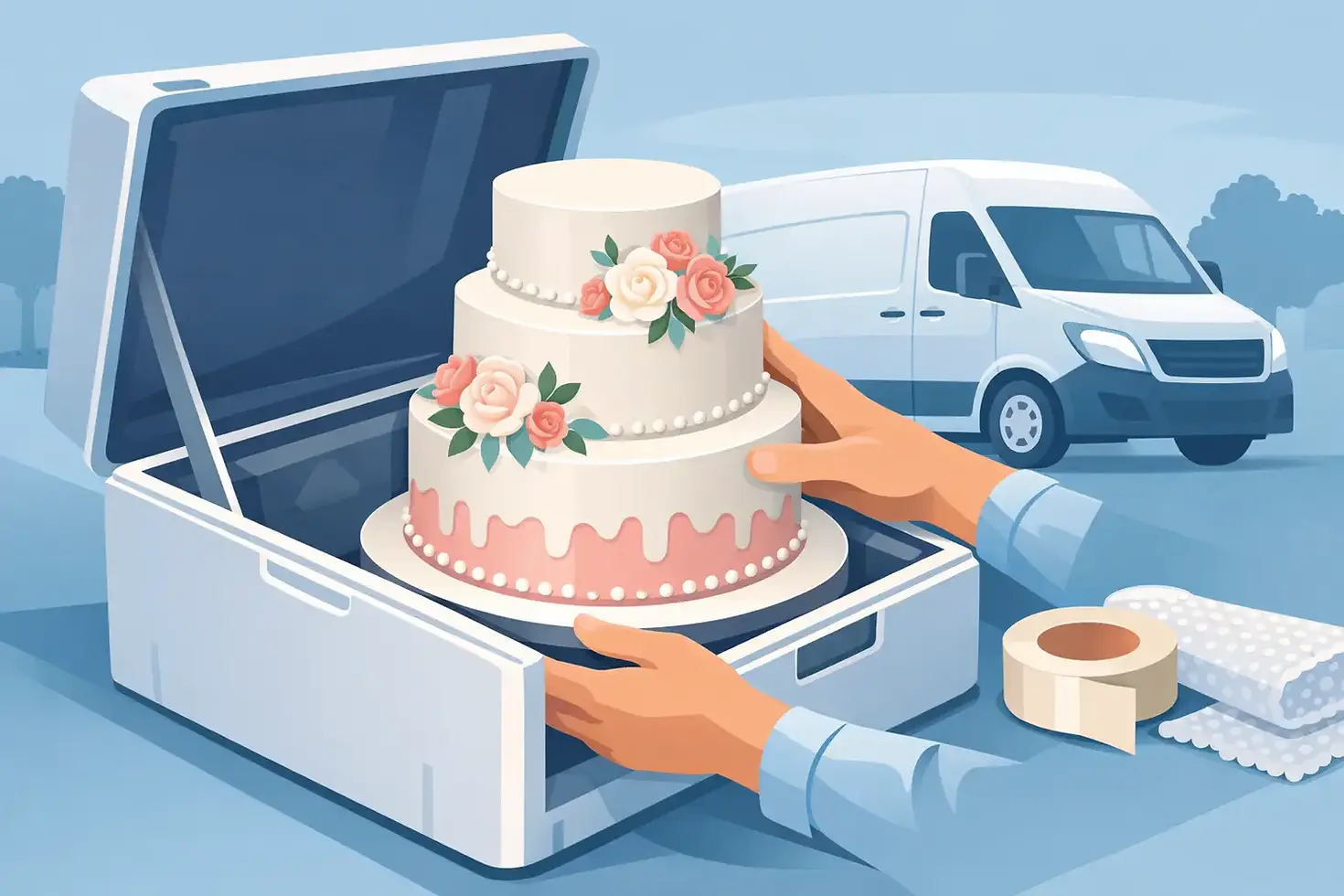
A tall, sturdy cake box protects the design from dust, accidental contact, and sudden movement. The box should be large enough that frosting and decorations do not touch the sides, but not so oversized that the cake board can slide freely inside.
Place a non-slip mat beneath the cake board inside the box. This simple layer adds grip and reduces shifting when the vehicle turns or brakes. If there is extra room around the board, use clean food-safe packing material around the base only. Avoid pushing anything against the cake itself.
For a very tall cake, a box may not be practical. In that case, use a clean, rigid cake carrier or transport it on a stable board with a tall protective cover. Keep hands away from the sides of the cake and hold the board from underneath, not by the edge.
How to Transport Tiered Cakes in a Car
The floor of the passenger-side front seat or a flat trunk area is often more stable than a seat cushion. Seat cushions tilt and compress, which can cause even a well-built cake to lean. The ideal location is a flat surface where the box can sit level and cannot slide.
Before placing the cake in the car, cool the interior with air conditioning. Once the cake is loaded, drive directly to the venue. Extra stops, errands, and waiting in a parked vehicle expose the cake to heat and create unnecessary risks.
Drive as if there is a full glass of water balanced beside you. Take turns slowly, brake gradually, and leave extra distance between your car and the vehicle ahead. Speed bumps, roundabouts, and abrupt lane changes are the common moments when cakes shift. A trusted passenger can watch the cake during the trip, but no one should try to hold a tiered cake on their lap.
Avoid placing the cake in direct sunlight, near a heater vent, or in the open bed of a vehicle. Even a short stretch of direct sun can soften frosting and compromise a carefully crafted finish.
Keep Decorations Separate When Necessary
Some details are better added at the venue. Tall cake toppers, fresh flowers, delicate sugar sails, candles, and oversized figurines can become unstable during travel. Pack these pieces in a separate container, then add them once the cake is positioned on its display table.
If using fresh flowers, make sure they are food-safe or properly prepared so stems and floral materials do not touch the cake directly. Your baker or florist can advise on the safest way to finish the design.
Set Up the Cake Before Guests Arrive
Arriving at the venue is not the final step. Place the cake table away from direct sunlight, warm windows, outdoor doors, and speakers that may cause vibration. Make sure the table is level, sturdy, and large enough for the cake stand and serving tools.
If the cake has traveled chilled, give it the right amount of time to come closer to serving temperature. Butter cakes often taste best after a short period at room temperature, while whipped cream, cream cheese, custard, or mousse fillings should stay refrigerated until closer to cutting time. The right timing depends on the recipe, so follow your baker's storage guidance rather than using one rule for every cake.
Check the cake from all sides before guests arrive. Add the topper, flowers, or final decorations, smooth a minor mark with a clean palette knife if needed, and keep the original box nearby. It can be useful for protecting leftover cake after the celebration.
Common Mistakes That Put Tiered Cakes at Risk
The most damaging mistake is assuming a beautiful cake is automatically built to travel. Decorative height and internal strength are two different things. Always confirm that a stacked cake has proper boards and supports, especially when it includes multiple tiers or heavy decorations.
Another common error is carrying the cake on a car seat or having someone hold it while driving. Both feel convenient, but neither creates a reliably level surface. Equally risky is opening the box repeatedly to check the cake. Each inspection can change the temperature, disturb the setup, or invite an accidental touch.
Finally, do not rush the final handoff. If you are collecting the cake yourself, clear space in the car before pickup and know exactly where it will sit. If the cake is being delivered, make sure someone at the venue can receive it promptly and direct the driver to a cool, stable setup area.
When Professional Delivery Is the Better Choice
For weddings, tall custom cakes, detailed fondant work, and milestone celebrations, professional delivery provides welcome peace of mind. Experienced cake delivery teams understand how to load a cake level, manage temperature, and carry it safely into a venue. They also know when a design should be assembled on site rather than transported fully stacked.
Self-collection can work well for compact two-tier cakes and short drives, particularly when the car is cool and the route is straightforward. But when the cake is a major part of the event's visual moment, dependable delivery is often worth choosing. The goal is not simply to get the cake there - it is to have it arrive looking exactly as it did when it left the bakery.
A tiered cake deserves the same care in transit that it received in creation. Plan the route, prepare a level space, keep it cool, and give delicate finishing touches their own protected journey. Then the cake can take its place at the celebration with every tier, flower, and handcrafted detail ready for the photographs.


Comments