
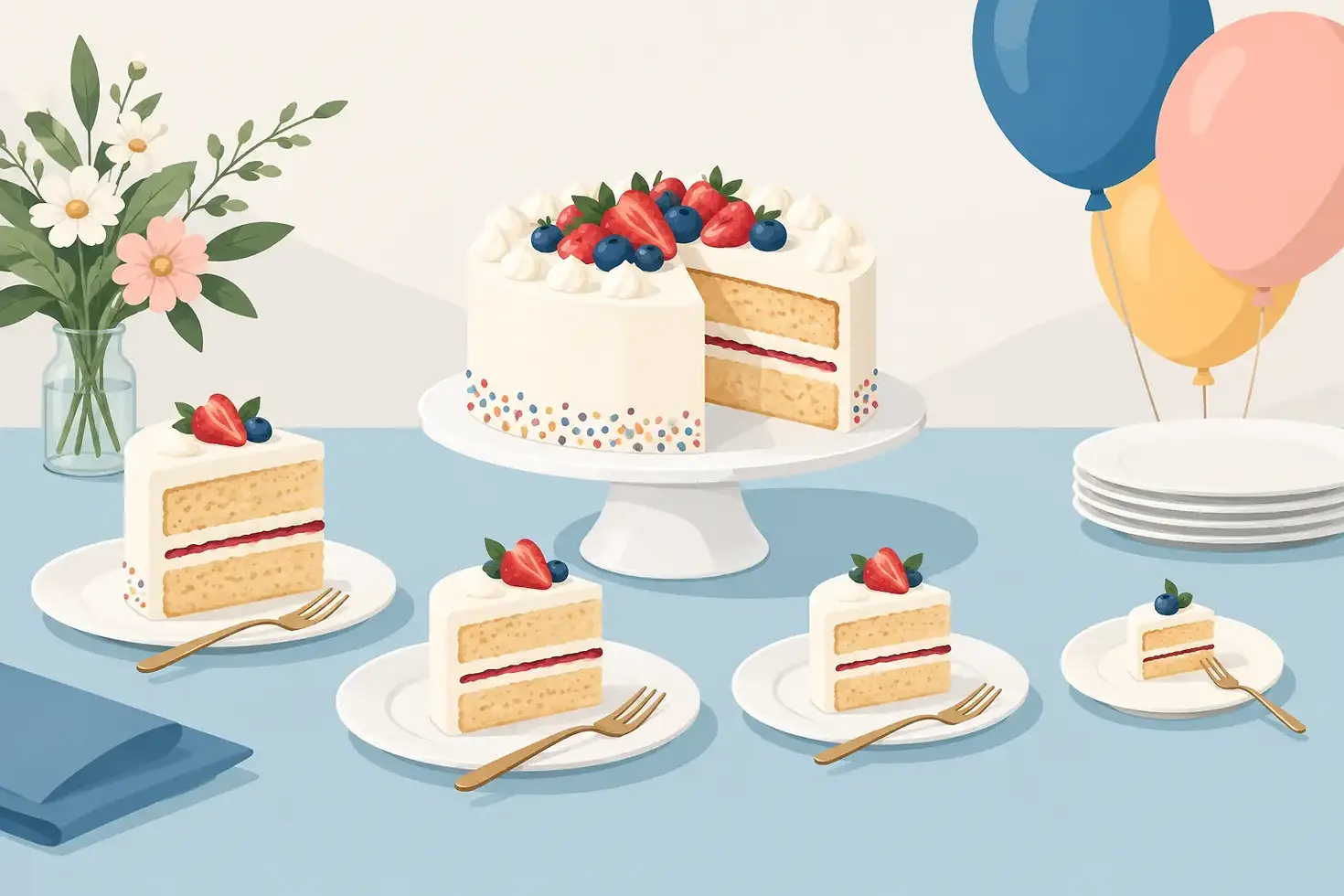
How to Select Cake Portions for Any Celebration

A beautiful cake should not run out before the last guest gets a slice. Whether you are planning a child’s birthday in Karama, an office surprise, or a wedding reception in Dubai, knowing how to select cake portions helps you order with confidence, manage your budget, and make the celebration feel generous from the first cut to the final crumb.
The right cake size is not only about the number on your guest list. The occasion, serving style, other desserts, guest ages, and design all affect how many portions you really need. A premium handcrafted cake deserves to be enjoyed properly, so a little planning goes a long way.
Start With the Number of Guests
Your guest count is the natural starting point, but it should not always be your final cake portion number. Confirm how many people are likely to attend, then think about who will actually be served cake. At a birthday party, nearly everyone usually expects a slice. At a large dinner, some guests may choose coffee or another dessert instead.
For small family celebrations, it is often wise to order a few extra portions. An 8-person gathering can easily need a cake for 10 to 12 servings when children ask for seconds, family members take a slice home, or a late-arriving guest joins the celebration.
For larger occasions, ordering exactly one portion per guest can work when cake is served as part of a full dessert table. Still, it is better to allow a modest buffer for milestone events. Running out of cake at an engagement, graduation, or baby shower is far more noticeable than having a few delicious slices left for the next day.
How to Select Cake Portions by Occasion
The same 20 guests can require very different cake sizes depending on why they are gathering. Consider the role the cake plays at your event before choosing a size.
Birthdays and family gatherings
For birthdays, cake is often the main sweet moment of the party. Plan for one standard portion per guest, plus 10% to 20% extra when possible. If you have a group of 25, a cake serving 28 to 30 people is a comfortable choice.
Children’s parties can be slightly different. Young children may eat smaller slices, but parents, siblings, and extended family often enjoy cake as well. Count the adults, not only the children named on the invitation. A themed kids’ cake may also be the centerpiece of photos, candle blowing, and the party table, so size and visual impact both matter.
Office celebrations and team events
For office birthdays, farewells, and achievement celebrations, smaller dessert portions are usually appropriate. Many guests will take a modest slice during a break, especially if the event follows lunch or includes pastries. A cake that serves 20 can often suit a team of 20 to 25 when it is cut neatly and accompanied by coffee, cupcakes, or cookies.
If the cake is the only refreshment, order more generously. People may skip lunch, arrive from meetings hungry, or want an extra slice to take back to their desk.
Weddings, engagements, and formal events
Wedding cake portions are typically slimmer than birthday portions because guests are often served a full meal first. A traditional event serving is commonly cut smaller and taller, allowing a well-designed tiered cake to serve more people than it appears to at first glance.
However, formal portions only work when the caterer or serving team cuts consistently. If you want visibly generous slices, add extra servings to your order. Couples also need to decide whether every guest receives cake or whether the cake is mainly for the ceremonial cutting, with other desserts offered afterward.
Baby showers, brunches, and afternoon tea
At a baby shower or afternoon celebration, guests may prefer a lighter slice, particularly when cupcakes, tarts, macarons, or other sweets are also on the table. One portion per guest is still the safest plan, but a smaller cake may be suitable if you are serving several desserts.
A custom cake can be designed as the focal point, while matching bite-size desserts provide variety. This is a smart option when you want an elevated dessert display without relying on one large cake alone.
Understand Portion Size, Not Just Cake Diameter
Cake sizes are often described by diameter, but diameter alone does not tell the whole story. Cake height, number of layers, shape, and cutting style determine the final serving count.
A tall, layered round cake can provide more servings than a shallow cake of the same width. A rectangular or sheet-style cake is especially practical for larger groups because it is easy to cut into even portions. Tiered cakes create a strong visual statement and are ideal for weddings and major milestones, but the serving count should be confirmed based on each tier’s dimensions.
For a casual family party, portions are usually cut around 1.5 to 2 inches wide. For formal gatherings, slices may be narrower, especially when cake is served after a meal. If you picture generous bakery-style slices, tell your cake shop that when ordering. The portion estimate should match the way you plan to serve it.
Factor in Other Desserts and the Menu
A cake never exists in isolation at a celebration. Before selecting portions, look at the complete food plan.
If you are serving a rich dinner followed by cheesecake, milk cake, cupcakes, and cookies, you can generally rely on smaller cake portions. Guests will appreciate choice, but not everyone will take every dessert. In that case, a cake designed for about 80% to 90% of your guest count may be enough, provided there are plentiful alternatives.
If the cake is the only dessert, or if it is a light sponge cake that guests will happily eat after dinner, plan for every guest plus extras. This is also true for celebrations held in the afternoon, when cake may be served with tea or coffee as the main treat.
Flavor matters, too. A rich chocolate dream cake, dense cheesecake, or indulgent milk cake may be served in slightly smaller portions than a light vanilla sponge with fresh fruit. That does not mean ordering less automatically. It means choosing a serving style that suits the cake and the occasion.
Plan for Leftovers Without Overordering
Extra cake is rarely a bad thing. A few leftover slices can become a welcome breakfast treat, a next-day dessert, or a thoughtful send-home box for close family. Still, ordering double the number of guests “just in case” can lead to waste and a larger bill than necessary.
A sensible approach is to add a small cushion rather than dramatically increasing the cake size. For gatherings of fewer than 15 people, two to four extra portions are usually plenty. For groups of 30 or more, adding around 10% provides reassuring flexibility without excessive leftovers.
If you expect several guests to request take-home slices, factor that in honestly. This is common at family gatherings, especially when the cake has a special custom design or a favorite flavor. It is better to plan for it than to cut tiny portions at the end of the event.
Match the Cake Design to the Serving Goal
Custom cakes are made to be seen before they are served. A detailed fondant figure, floral finish, photo design, or themed topper can influence the size you choose because the cake needs enough surface area for the concept to look balanced.
A cake for 10 people can be beautifully personalized, but an elaborate superhero scene, princess castle, or wedding floral design may need a larger canvas. In these cases, choose the serving count first, then discuss how the design can be built around it. Do not order a cake that is too small for the artwork simply because the guest list is short.
For larger events, tiers can offer both beauty and practicality. They provide height, create a memorable centerpiece, and give your cake maker room to combine flavors across levels. Just remember that decorative dummy tiers and edible tiers are not the same, so always confirm the number of actual servings included.
Share the Right Details When Ordering
The easiest way to receive an accurate recommendation is to tell your bakery the guest count, event type, serving time, and whether other desserts will be available. Mention if you want generous slices, formal portions, leftovers, or cake boxes for guests to take home.
At Bakery Bites Cafe, a custom cake order can be planned around both the celebration design and the number of people you expect to serve. That combination of handcrafted presentation and practical portion planning helps make the cake feel as thoughtful on the plate as it does on the table.
When you are deciding between two sizes, choose the one that gives your celebration breathing room. A few extra slices mean you can serve with warmth, offer seconds when the moment calls for it, and let every guest leave with a sweet memory.





Comments