
How to Store Celebration Cake for Lasting Freshness

A beautiful celebration cake deserves more than one grand moment. Whether it is a birthday cake with custom fondant details, a baby shower centerpiece, or a wedding cake saved for the next day, knowing how to store celebration cake protects the flavor, texture, and finish that made it special in the first place.
In Dubai's warm climate, storage matters even more. Heat can soften buttercream, condensation can affect fondant, and an uncovered cake can lose its tender crumb surprisingly fast. The right method depends on the frosting, filling, weather, and how long you plan to keep it.
How to Store Celebration Cake Before the Party
The best place for a celebration cake is a cool, dry room away from direct sunlight, warm appliances, and windows. Keep it in its cake box whenever possible. The box protects the design from dust, accidental contact, and strong odors while allowing the cake to breathe better than a tightly wrapped frosted cake.
For a cake covered in classic buttercream or fondant with no perishable filling, room temperature is usually best for a short period. This helps preserve a soft texture and keeps the frosting looking smooth. In an air-conditioned home, it can generally stay out for the day of the celebration and overnight if your bakery has advised that the ingredients are shelf-stable.
Do not place the box on top of the refrigerator, beside the stove, or in a sunny entryway while guests arrive. Those areas fluctuate in temperature. For a custom cake with delicate flowers, tall toppers, character details, or intricate piping, choose a level surface where it will not be bumped or tilted.
When the Refrigerator Is Necessary
Some cakes need refrigeration for food safety. Chilled storage is the right choice when the cake contains fresh cream, cream cheese frosting, mousse, custard, pastry cream, fresh fruit, or a milk-based filling. Cheesecakes and milk cakes should also remain refrigerated until serving.
Keep the cake in its box or a tall cake carrier before placing it in the refrigerator. Make space first so the sides and top decorations are not pressed against other food. Refrigerators can be dry and carry food odors, so an uncovered cake is never the best option.
If the cake has fondant decorations, refrigeration can still be necessary when the filling requires it. The trade-off is possible condensation after removal. Protect the cake in its box, avoid opening it repeatedly, and allow it to warm gradually before serving.
Bring Chilled Cake Back to Its Best Texture
A cold cake may be safe to eat, but it will not always taste like it did when it was freshly prepared. Butter-based cakes become firmer in the refrigerator, and chilled frosting can feel dense rather than creamy. Plan ahead so the cake has time to come closer to room temperature.
For most refrigerated celebration cakes, remove the boxed cake 1 to 2 hours before cutting. Larger cakes may need closer to 2 to 3 hours, especially if they have several tiers or dense layers. Leave it inside the box while it warms. This reduces condensation directly on the surface and helps preserve the clean finish of the frosting.
Do not use a warm oven, hair dryer, sunny balcony, or microwave to speed up the process. Fast heat can cause buttercream to melt, colors to run, and fondant to sweat. A little patience gives every layer the texture it was meant to have.
Store Leftover Celebration Cake Without Drying It Out
After candles are blown out and photos are taken, leftover cake needs a different approach. The cut edges are exposed, which is where moisture escapes first. Cover those exposed areas as soon as practical.
For a buttercream or fondant cake that can stay at room temperature, press plastic wrap gently against the cut sides only, then return the remaining cake to its box or carrier. Avoid wrapping the entire decorated cake tightly if you can. Direct contact with frosting can pull away piping, texture, or edible details.
For refrigerated cakes, cover cut sides with plastic wrap and place the cake in a cake carrier or large airtight container. If the original box is sturdy and tall enough, it can work well inside the refrigerator, provided the cake is also protected from dry air. A container is especially useful for slices, which dry out faster than a larger remaining portion.
If you are packing individual slices for family or guests, use airtight containers and keep different flavors separate. A chocolate cake slice stored beside a strongly flavored dessert can pick up unwanted aromas. Add a small sheet of parchment between slices if they may touch.
How Long Leftover Cake Usually Keeps
Storage time depends on the recipe. A plain sponge cake with buttercream typically remains at its best for 2 to 3 days when stored correctly. Cakes with fresh cream, cream cheese, custard, mousse, fresh fruit, or milk-soaked layers should be refrigerated and enjoyed sooner, often within 2 to 3 days.
Fondant-covered cakes can look their best for several days, but the cake beneath the fondant still follows the rules of its filling. When in doubt, follow the storage guidance provided with your order. A handcrafted cake may have unique fillings, finishes, or structural details that call for more specific care.
Can You Freeze a Celebration Cake?
Yes, many celebration cakes freeze well, especially buttercream-frosted sponge cakes without delicate fresh fruit or cream fillings. Freezing is a smart choice when you want to save a portion after a large event rather than rush through leftovers.
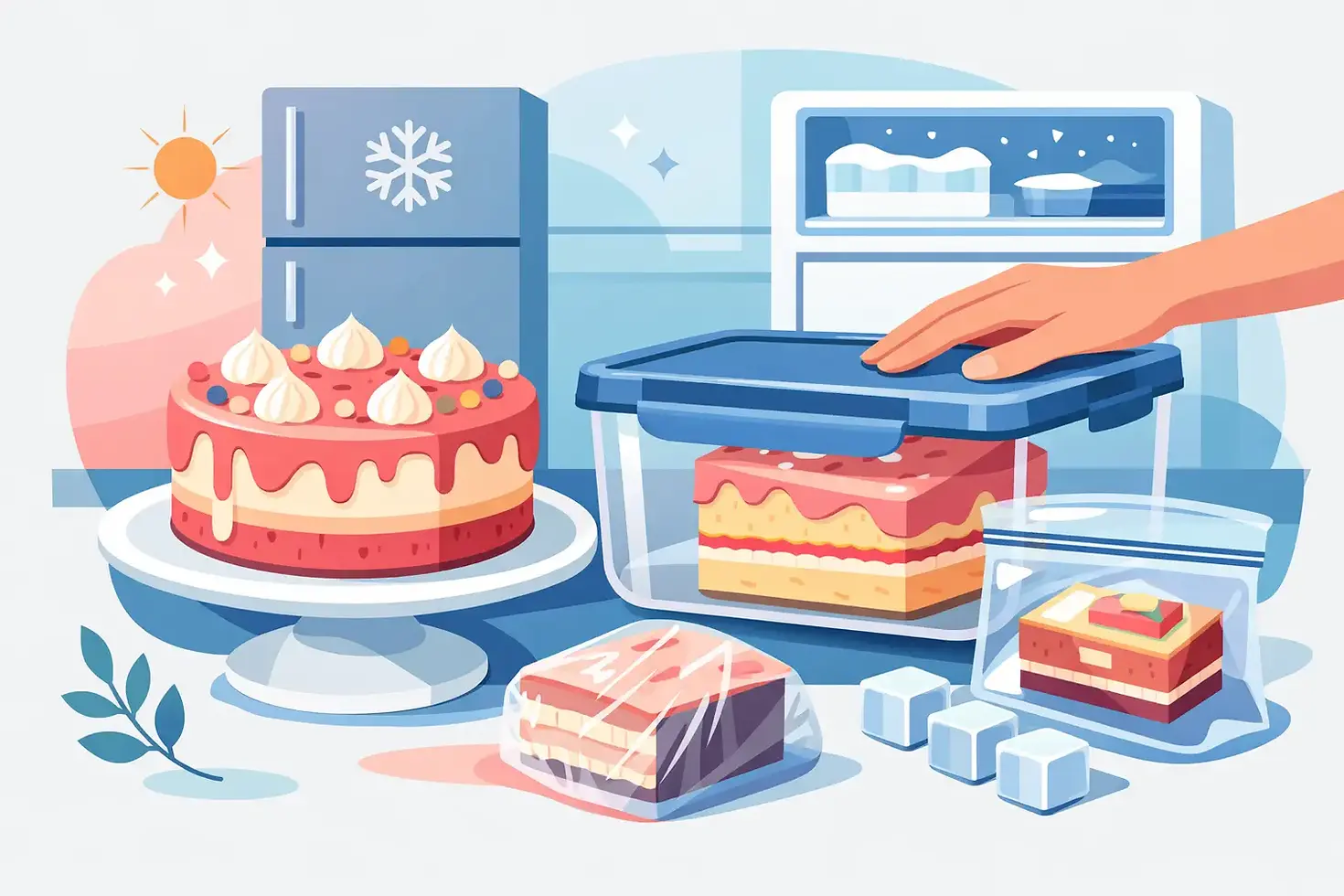
Start by chilling the cake or slices until the frosting is firm. Then wrap the portion snugly in plastic wrap, followed by a layer of foil or an airtight freezer container. The first layer helps prevent freezer burn; the second adds protection against odors and moisture loss. Label the package with the date and flavor so it does not become a mystery at the back of the freezer.
For the best taste and texture, enjoy frozen cake within one month. To thaw it, place the wrapped portion in the refrigerator overnight, then let it sit at room temperature for 30 to 60 minutes before serving. Keep it wrapped during the first stage of thawing to prevent condensation from forming directly on the cake.
Freezing is less ideal for cakes topped with delicate sugar flowers, wafer-paper elements, fresh berries, or crisp decorations. These details may soften, weep, or lose their shape after thawing. If the design is particularly detailed, save undecorated slices rather than freezing the decorated centerpiece.
Common Cake Storage Mistakes to Avoid
The most common mistake is refrigerating every cake automatically. While refrigeration is essential for perishable fillings, it can make a standard buttercream cake dry and firm when it is not needed. Another mistake is leaving a cake uncovered after serving. Even a few hours in dry air can affect the cut edges.
Avoid putting a warm cake into a sealed container. Trapped warmth creates condensation, which can make frosting slippery and decorations unstable. Similarly, do not cut a cake until it has had enough time to settle after delivery, especially if it traveled through warm weather.
Be mindful of the cake board as well. When storing a large cake, always lift from underneath the board with both hands. Never carry it by the box lid or tilt it sideways to fit into a crowded refrigerator. A premium custom cake is carefully built, but it still needs a stable, level journey from delivery to dessert table.
Keep Every Slice Worth Celebrating
The finest cakes are made to be enjoyed, not worried over. Give your cake a cool, protected place before the event, refrigerate only when its filling calls for it, and cover leftover cut edges promptly. Those small choices preserve the moist layers, smooth finish, and handcrafted details your occasion deserves.
For a custom cake made with fresh ingredients and precise finishing, Bakery Bites Cafe can also help with order-specific storage guidance. A little care after delivery means the last slice can feel nearly as special as the first.





Comments